USDA endorsement of your pet’s health certificate costs $101 per certificate carrying no laboratory test results, and $160 with one or two, plus $10 for each additional pet on the same certificate (USDA APHIS cost-to-endorse page, last modified 2026-06-18, checked 2026-08-26). It is the only fee here that a government publishes, and it is not what makes a pet move expensive. The sequence is, and families who start the clocks in the wrong order lose their flight date.
Microchip first, then rabies
The microchip goes in first, the rabies vaccination second. The European Commission states that the vaccination date “cannot precede microchip identification/reading” (Delegated Regulation (EU) 2020/688 Annex VII Part 1, quoted on the Commission’s pet movement page, checked 2026-08-26). APHIS says the same: a vaccination does not count if the pet had no microchip, or if the vet did not scan the chip first. Getting this backwards does not cost you a day. It voids the vaccination and restarts the clock.
The vaccination then becomes valid “not less than 21 days from the completion of the vaccination protocol for the primary vaccination” (European Commission, checked 2026-08-26). Some manufacturers specify 30 days, and APHIS says the manufacturer’s period governs. APHIS also warns that a first vaccination after a microchip, or after any lapse in cover, is a “primary” vaccination under EU rules, valid for one year only even from a three year vial. US pets skip the rabies antibody titration test, because the United States is on the Commission’s Annex II list (Implementing Regulation (EU) 2026/636).
What APHIS does
APHIS does not examine your pet. A USDA-accredited veterinarian does, and APHIS states that the accredited vet confirms your pet meets the destination’s entry requirements and submits the certificate for endorsement on your behalf. Endorsement means APHIS countersigns and embosses or stamps what that vet issued. Look up your destination on the country menu at aphis.usda.gov/pet-travel/us-to-another-country-export, reached from aphis.usda.gov/pet-travel. Destinations set their own rules and can change them at any time.
The EU windows and the point of entry
The “non-commercial” certificate applies when the owner or a designated person travels within five days of the pet, and five or fewer pets travel (APHIS, checked 2026-08-26). Three windows:
- The accredited vet’s issued certificate is valid for 30 days after issue (APHIS).
- USDA endorsement must fall within 10 days of arrival in the EU (APHIS). The Commission gives the same window: the certificate is “valid for 10 days from the date of issue by the official veterinarian until the date of the documentary and identity checks”.
Your pet must enter through a Travellers’ Point of Entry designated by the destination country, where documentary and identity checks are carried out (European Commission, checked 2026-08-26). Ireland lists six: Dublin Airport, Dublin Port, Cork Airport, Shannon Airport, Ringaskiddy and Rosslare Europort. Ireland also runs an advance notice portal to complete before arrival, and requires a compliance check on arrival (gov.ie Pet Travel, Department of Agriculture, Food and the Marine, updated 2026-08-05, checked 2026-08-26).
Tapeworm: Ireland, Finland, Malta, Norway
Dogs entering Ireland, Finland, Malta, Northern Ireland or Norway need treatment against Echinococcus multilocularis, given “within a period of not more than 120 hours and not less than 24 hours before the time of scheduled entry” (European Commission, citing Annex VII Part 2 of Delegated Regulation (EU) 2020/688, checked 2026-08-26). APHIS confirms the same window and names praziquantel as the recommended active ingredient. Cats are exempt. The window ends at arrival, so this step comes last.
Mexico
Cats need no health certificate. APHIS records Mexico’s position, effective 16 December 2019 and unchanged on the page checked 2026-08-26: cats go to the border without documentation and are inspected by SENASICA on arrival at the Agricultural and Livestock Health Inspection Office, which checks for infectious disease, ectoparasites, and fresh or healing wounds.
Dogs changed this month. From 3 August 2026 Mexico requires a “NWS Inspection Certificate for Pet Dogs Moving (Exporting) from the United States to Mexico”, signed by a USDA-accredited veterinarian no more than five days before arrival, following New World screwworm detections in the United States (APHIS Mexico page, checked 2026-08-26; Delta gives the same date).
Costa Rica
SENASA’s own requirement sheet for dogs and cats from the United States (DCA-PG-02-RS-01-IN-007 version 09, in force from 19 July 2024, downloaded 2026-08-26) requires a USDA-endorsed international veterinary certificate: a licensed vet examined the animal within two weeks of departure, it was treated for internal and external parasites within 15 days before export, and its rabies vaccination is valid on the day of entry if it is over three months old.
SENASA states that a pet in the cabin or as checked baggage with its owner needs only the health certificate at the border post. A pet travelling as manifested cargo, or arriving without its owner, needs a Costa Rican customs broker to obtain the prior import permit, the Formulario de Requisitos Sanitarios, before arrival.
Cabin, checked baggage, or manifest cargo
In cabin. Delta charges $200 each way for international in-cabin pets on tickets issued on or after 8 April 2025, and $150 within the US and Canada. The kennel must have ventilation on four sides for international travel and fit under the seat in front.
Checked baggage. Alaska Airlines and Hawaiian Airlines accept pets in a climate-controlled baggage compartment for $200 each way per kennel, pet and carrier up to 150 lbs combined. They do not accept pets in the hold to or from Europe at all, nor London Heathrow, Japan or Sydney (checked 2026-08-26).
Manifest cargo. Delta Cargo currently accepts pet shipments only for active US Military and State Department Foreign Service Officers on permanent change of station orders, “until further notice” (Delta, checked 2026-08-26). For most families that closes the route. Where Delta does carry a pet as cargo it requires a shipper approved by the International Pet and Animal Transportation Association, and publishes a temperature embargo: no shipment when the ground temperature anywhere on the routing exceeds 80F (27C) or falls below 20F (-7C), with a Certificate of Acclimation needed between 20F and 45F.
The crate standard
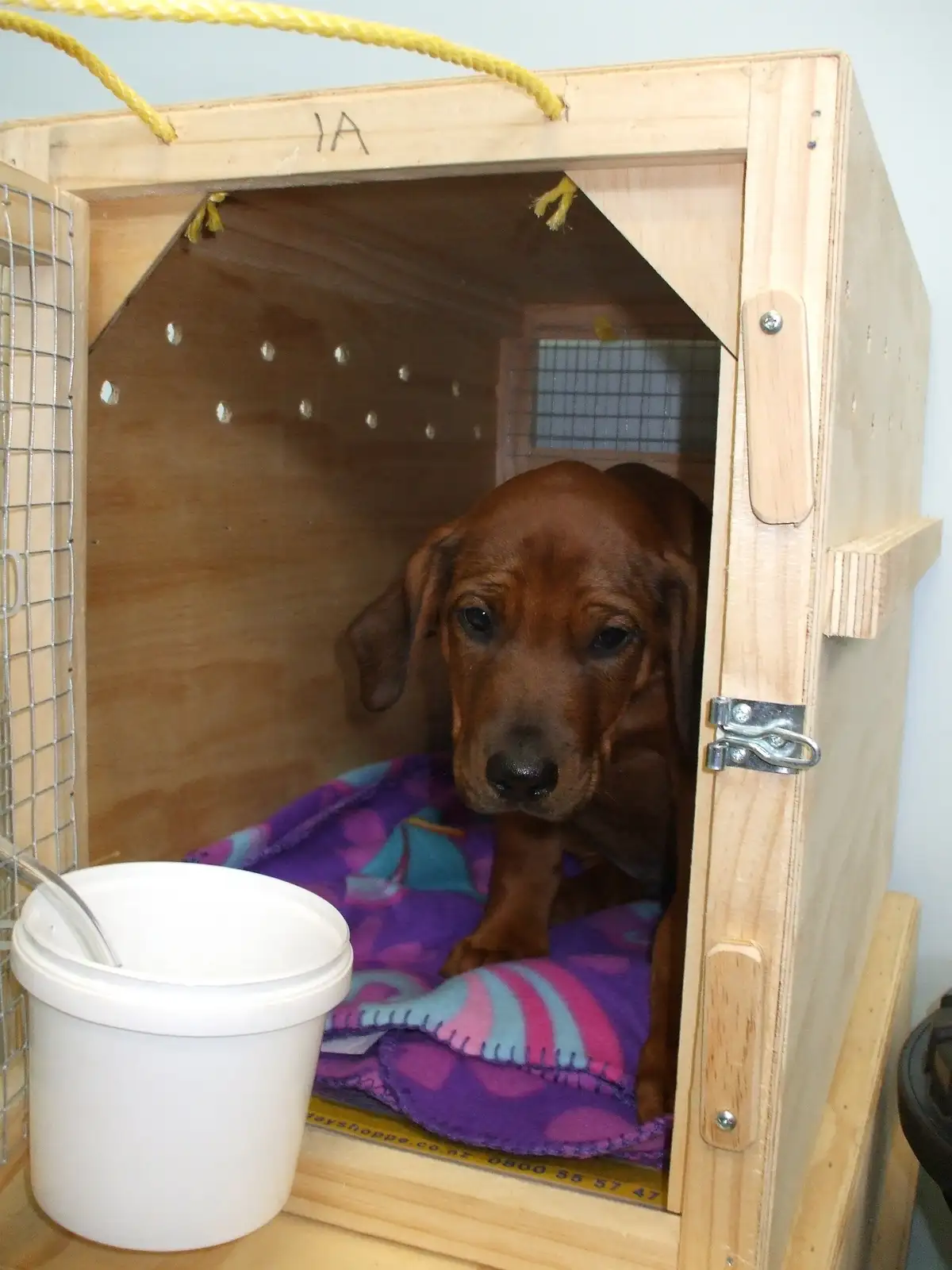
Delta states that pets in cargo “must be transported in travel crates/containers that comply with Container Requirement #1 in the current version of the International Air Transport Association Live Animals Regulations (IATA-LAR)”, and that the crate must let the pet “stand, sit-upright, lie down and turn around without touching the top or sides”. Alaska requires the carrier to “meet all USDA and IATA carrier requirements”, then gives the practical version: rigid construction with handholds, no soft-sided or wire crates, no wheels, and one metal grated door secured with releasable zip ties.
We could not verify these rules at IATA’s own site on 2026-08-26: iata.org returned no address record from three DNS resolvers all day. The LAR edition is unverified here, and the two airline pages above are what this section rests on.
What this costs
APHIS endorsement rises to $206 with three to six laboratory tests, and $275 with seven or more.
Pet relocation companies do not publish rates. Pricing is quoted per animal and per route, so this site publishes no shipper price. We are paid when you request a quote from a pet relocation company through this site, and that payment does not change a figure or a recommendation in this guide. No official source publishes veterinary fees, crate prices, or Ireland’s compliance check charge, so those are left out.
Working backwards from the flight
For a family flying to Dublin with a dog, counting back from arrival:
- 6 to 9 months out. Confirm the airline carries your pet on your exact route, in your chosen product.
- At least 5 months out. Microchip, then rabies, then 21 days, or 30 if the manufacturer says so.
- 30 days out. Your accredited veterinarian can issue the EU health certificate.
- 10 days out. Last safe point for USDA endorsement. Ireland’s returns as embossed paper, so allow shipping both ways.
- 5 days to 24 hours before arrival. Tapeworm treatment and the anti-Echinococcus table.
- Before departure. Ireland’s advance notice portal and the compliance check.
- Arrival day. One of the six points of entry. Nowhere else.
Who should not
Families with a snub-nosed breed. Alaska Airlines refuses brachycephalic dogs and cats in the baggage compartment, naming Bulldogs, Boxers, Pugs, Shih Tzus, Boston Terriers, Pekingese, and Persian, Himalayan and Exotic Shorthair cats, and runs a separate French and English Bulldog cargo embargo from 31 July to 30 September 2026. Delta states that brachycephalic dogs, cats and their mixes “are not permitted on Delta or Delta Connection flights”. If your dog is snub-nosed and too large for an under-seat carrier, these carriers will not fly it, and a larger shipper budget does not change that. What remains is a carrier that still accepts the breed, surface routing, or rehoming. Have that conversation first, not six weeks out.
Families whose destination quarantines on arrival. None of the destinations on this site quarantines a compliant dog or cat. A non-compliant one is another matter: APHIS warns that pets arriving in EU member states without meeting the requirements “may be refused entry or quarantined upon arrival at the owner’s expense”. Where a real quarantine regime applies, the periods are long: Delta’s pet page, relaying the Hawaii Department of Agriculture, puts Hawaii’s quarantine at generally 120 days, under 31 only if pre-arrival and post-arrival requirements are met. If your destination is one of those, settle whether your family accepts months of separation before you book anything.